
Deepfake attack detection
Detect and prevent deepfake attacks in digital ID verification
Go beyond detection of common deepfakes. Identify sophisticated attacks, and synthetic media in real time.
53%
of businesses have been targets of a financial scam powered by “deepfake” technology.
Medius
47%
of organizations cited adversarial GenAI advances as a primary concern.
World Economic Forum
30%
of enterprises will no longer consider fraud solutions in isolation by 2026 due to AI deepfakes.
Gartner
The rising threat of deepfake attacks in identity verification
Deepfake images, face swaps, and video are among the fastest-growing threats to identity verification and online trust. Criminals exploit readily available tools to manipulate IDs, carry out template attacks, and fool biometric systems.
AI-powered fraud is evolving faster than most defenses can keep up.
Get our ebook: Layered Defense in the Age of AI-Powered Fraud - and see how leading organizations are closing the gap.

Basic deepfake detection isn’t enough
Protecting identity verification goes beyond detecting deepfakes created using common tools. Evolving threats require broader media analysis. And, because deepfakes are often combined with tactics like injection and template attacks, a comprehensive fraud defense is essential.
THE RISK
How AI deepfakes fuel fraud
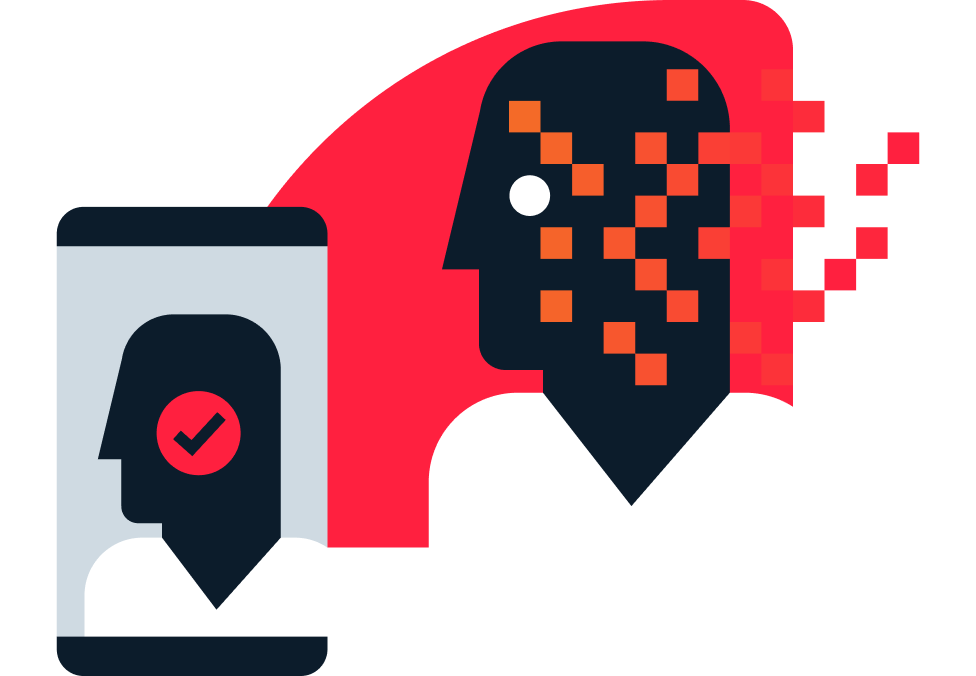
Generative AI deepfakes enable fraudsters to convincingly impersonate real individuals, bypass security controls, and conduct attacks at scale. During identity verification and onboarding, deepfakes may be used to:
- Create fake ID documents that appear authentic
- Build sophisticated synthetic identities combining real and fabricated data
- Bypass biometric checks, often alongside injection attacks
According to Javelin Research, 2024 new account fraud losses reached $6.2 billion in the US alone.

the mitek solution
Secure identity verification with Mitek
Mitek’s AI-powered platform detects deepfakes of any type, content, or delivery method, while keeping the customer experience smooth. By examining artifacts across multiple layers within the media rather than simply focusing on the most popular deepfake generators, we help businesses protect identity verification and biometric checks to reduce fraud losses and maintain trust during and after onboarding.
Fight fraud with Mitek’s AI deepfake detection
Effectively identifies complex deepfakes such as face swaps and diffusion techniques.
Covers a wide range of attacks, examining evidence from the point of capture to comparison.
Available as part of Mitek’s Digital Fraud Defender solution or as an SDK.
How does Mitek’s deepfake detection work?
Using sophisticated AI algorithms, Mitek analyzes subtle clues in image and video data to distinguish real content from AI-manipulated or generated deepfakes.
Mitek is trusted by over 7,000 organizations worldwide
Trusted by millions globally, our enterprise-grade solutions are relied on by some of the world’s leading enterprises, offering peace of mind for both the company and their customers.
FREQUENTLY ASKED QUESTIONS